NEWS
Connecticut is now Bear Country
Bears have entered Connecticut homes more than 50 times so far this year, and state officials are urging residents to take precautions as the black bear population – and associated conflict – continues to grow.
“Connecticut is now bear country, and we have to act like it’s bear country,” said Jenny Dickson, director of the wildlife division of the state Department of Energy and Environmental Protection, or DEEP.
The agency held a public forum Wednesday evening in Warren, a small town in Litchfield County where bears have entered multiple homes this year.
“There’s been a lot more interactions with bears this year,” said Warren First Selectman Greg LaCava. “Bears are a part of Warren now, and we have to figure this out. People have a lot of questions.”
LaCava said an adult bear with three cubs recently visited his yard.
“They didn’t mind us yelling at them or my dog barking at them,” LaCava said. “They were climbing trees, having a good time. They’re becoming, I think, a little more comfortable around food sources and humans.”
DEEP wildlife biologist Jason Hawley said bears in the state are, in fact, becoming increasingly habituated to humans – “when bears lose their fear” – and food-conditioned – “when bears start to directly associate food with people.”
“They see a person, they hear a person, they smell a person, and they know they can get food near people and nothing bad is going to happen to them,” Hawley told a crowd of about 50 people Wednesday evening.
Bear hunt proposal is controversial in CT
The 51 home entries reported so far this year across the state is more than was reported all of last year, Hawley said. The state’s 3,700 reported human-bear conflicts last year gives Connecticut the lead among northeast states, even compared to neighbors with much higher bear populations, like Massachusetts and New York.
Hawley said some residents’ patience is growing thin.
“There’s something called biological carrying capacity, and that’s basically: If you took humans out of the mix, what can the ecosystem hold?” Hawley said. “Then we have this other term called cultural carrying capacity, and that’s basically human tolerance: How much are humans willing to tolerate?”
“I can tell you for a fact that in many parts of the northwestern parts of Connecticut, for a lot of people in those areas, we have exceeded cultural carrying capacity,” Hawley said.
DEEP advocates for a bear hunt, a practice that’s legal in all other northeastern states with established bear populations but not allowed in Connecticut. Proposals for such a hunt have died in the state legislature in recent years. Opponents say the state should look only to non-lethal solutions to address human-bear conflicts, such as educational efforts – and that residents need to do more to remove food sources to make it less enticing for bears.
Tips to reduce bear conflicts
Without a bear hunt available, DEEP is leaning into public education.
“Reduce any chance that bears are going to find human-source food,” Dickson said. “That’s things like bird feeders, or having your pet food outdoors.”
“Not putting your trash out until collection day is really important,” she said. “If you go away from your house for a little while, make sure you close those windows and doors. Don’t just leave the screen windows or screen doors in place. That’s not going to stop a hungry bear.”
DEEP Deputy Commissioner Mason Trumble added that other good ideas include bear-resistant trash cans, locking car doors and removing food from vehicles.
Hawley, the biologist, also advised residents not to rush to film bears on their property, but instead make clear they’re not welcome.
“There's some corny saying: ‘If you care, scare the bear,’” Hawley said. “Don't hurt the bear, but try to scare the bear out of your yard. If you can do it safely from a safe distance, yell – compressed air horns work well. Just anything you can do – paintball guns. Don't hit them in the face, because we don't want bears to lose their eyes.”
“It might seem cruel to some people, but it's very important for that bear, and you may end up actually saving that bear's life by doing that,” Hawley said.
Hawley said a hunt would definitely help mitigate conflicts between bears and humans, but would “not solve all our problems.”
“People are still going to have to be responsible, secure their food, take bird feeders down, and make sure garbage is inaccessible,” Hawley said.
Karen Miller came to Wednesday’s forum from nearby Bethlehem to hear from experts on how to safely coexist with bears. She said she and her neighbors see bears frequently.
“I can't even go for my mail without being concerned that I'm going to meet a bear,” she said. “I was in my garden, and I just heard a slight noise, and I looked over and the bear was about eight feet away from me.”
“That’s just not right,” Miller said. “Hunting is a very good solution.”
CT Public recently ran this overview of the challenges CT faces with an ever increasing and bold black bear population.
Bears have entered Connecticut homes more than 50 times so far this year, and state officials are urging residents to take precautions as the black bear population – and associated conflict – continues to grow.
“Connecticut is now bear country, and we have to act like it’s bear country,” said Jenny Dickson, director of the wildlife division of the state Department of Energy and Environmental Protection, or DEEP.
The agency held a public forum Wednesday evening in Warren, a small town in Litchfield County where bears have entered multiple homes this year.
“There’s been a lot more interactions with bears this year,” said Warren First Selectman Greg LaCava. “Bears are a part of Warren now, and we have to figure this out. People have a lot of questions.”
LaCava said an adult bear with three cubs recently visited his yard.
“They didn’t mind us yelling at them or my dog barking at them,” LaCava said. “They were climbing trees, having a good time. They’re becoming, I think, a little more comfortable around food sources and humans.”
Joe Amon/Connecticut Public
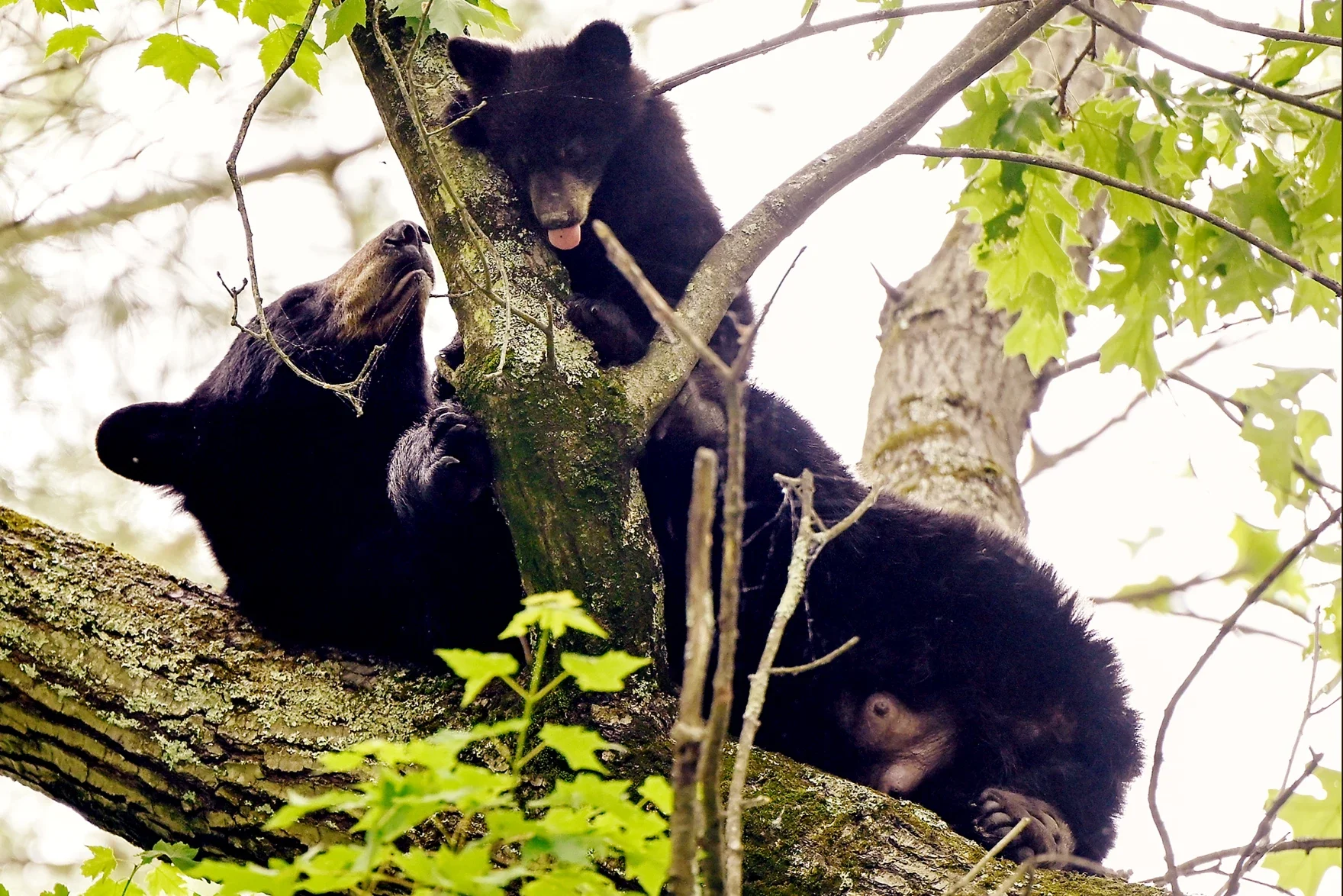
An adult female bear with one of her cubs high up a tree in Simsbury, Connecticut May 27, 2026. The other two cubs with her climbed much higher in the tree as they were startled by the noise from work being done to the home.
DEEP wildlife biologist Jason Hawley said bears in the state are, in fact, becoming increasingly habituated to humans – “when bears lose their fear” – and food-conditioned – “when bears start to directly associate food with people.”
“They see a person, they hear a person, they smell a person, and they know they can get food near people and nothing bad is going to happen to them,” Hawley told a crowd of about 50 people Wednesday evening.
Bear hunt proposal is controversial in CT
The 51 home entries reported so far this year across the state is more than was reported all of last year, Hawley said. The state’s 3,700 reported human-bear conflicts last year gives Connecticut the lead among northeast states, even compared to neighbors with much higher bear populations, like Massachusetts and New York.
Hawley said some residents’ patience is growing thin.
“There’s something called biological carrying capacity, and that’s basically: If you took humans out of the mix, what can the ecosystem hold?” Hawley said. “Then we have this other term called cultural carrying capacity, and that’s basically human tolerance: How much are humans willing to tolerate?”

Mark Mirko/Connecticut Public
Jason Hawley, a Connecticut Department of Energy and Environmental Protection wildlife biologist with DEEP’s bear program testifies in support of legislation to permit bear hunting in Connecticut. “I love bears,” said Hawley, “Obviously, I've dedicated my career to them. Our job is to ensure that they recover and that the population is viable for our grandchildren.
“I can tell you for a fact that in many parts of the northwestern parts of Connecticut, for a lot of people in those areas, we have exceeded cultural carrying capacity,” Hawley said.
DEEP advocates for a bear hunt, a practice that’s legal in all other northeastern states with established bear populations but not allowed in Connecticut. Proposals for such a hunt have died in the state legislature in recent years. Opponents say the state should look only to non-lethal solutions to address human-bear conflicts, such as educational efforts – and that residents need to do more to remove food sources to make it less enticing for bears.
Tips to reduce bear conflicts
Without a bear hunt available, DEEP is leaning into public education.
“Reduce any chance that bears are going to find human-source food,” Dickson said. “That’s things like bird feeders, or having your pet food outdoors.”
“Not putting your trash out until collection day is really important,” she said. “If you go away from your house for a little while, make sure you close those windows and doors. Don’t just leave the screen windows or screen doors in place. That’s not going to stop a hungry bear.”
DEEP Deputy Commissioner Mason Trumble added that other good ideas include bear-resistant trash cans, locking car doors and removing food from vehicles.
Hawley, the biologist, also advised residents not to rush to film bears on their property, but instead make clear they’re not welcome.
“There's some corny saying: ‘If you care, scare the bear,’” Hawley said. “Don't hurt the bear, but try to scare the bear out of your yard. If you can do it safely from a safe distance, yell – compressed air horns work well. Just anything you can do – paintball guns. Don't hit them in the face, because we don't want bears to lose their eyes.”
“It might seem cruel to some people, but it's very important for that bear, and you may end up actually saving that bear's life by doing that,” Hawley said.
Hawley said a hunt would definitely help mitigate conflicts between bears and humans, but would “not solve all our problems.”
“People are still going to have to be responsible, secure their food, take bird feeders down, and make sure garbage is inaccessible,” Hawley said.
Karen Miller came to Wednesday’s forum from nearby Bethlehem to hear from experts on how to safely coexist with bears. She said she and her neighbors see bears frequently.
“I can't even go for my mail without being concerned that I'm going to meet a bear,” she said. “I was in my garden, and I just heard a slight noise, and I looked over and the bear was about eight feet away from me.”
“That’s just not right,” Miller said. “Hunting is a very good solution.”
Let us know what you think!
Exploring Connecticut's state parks: Conservation, hiking and Indigenous history
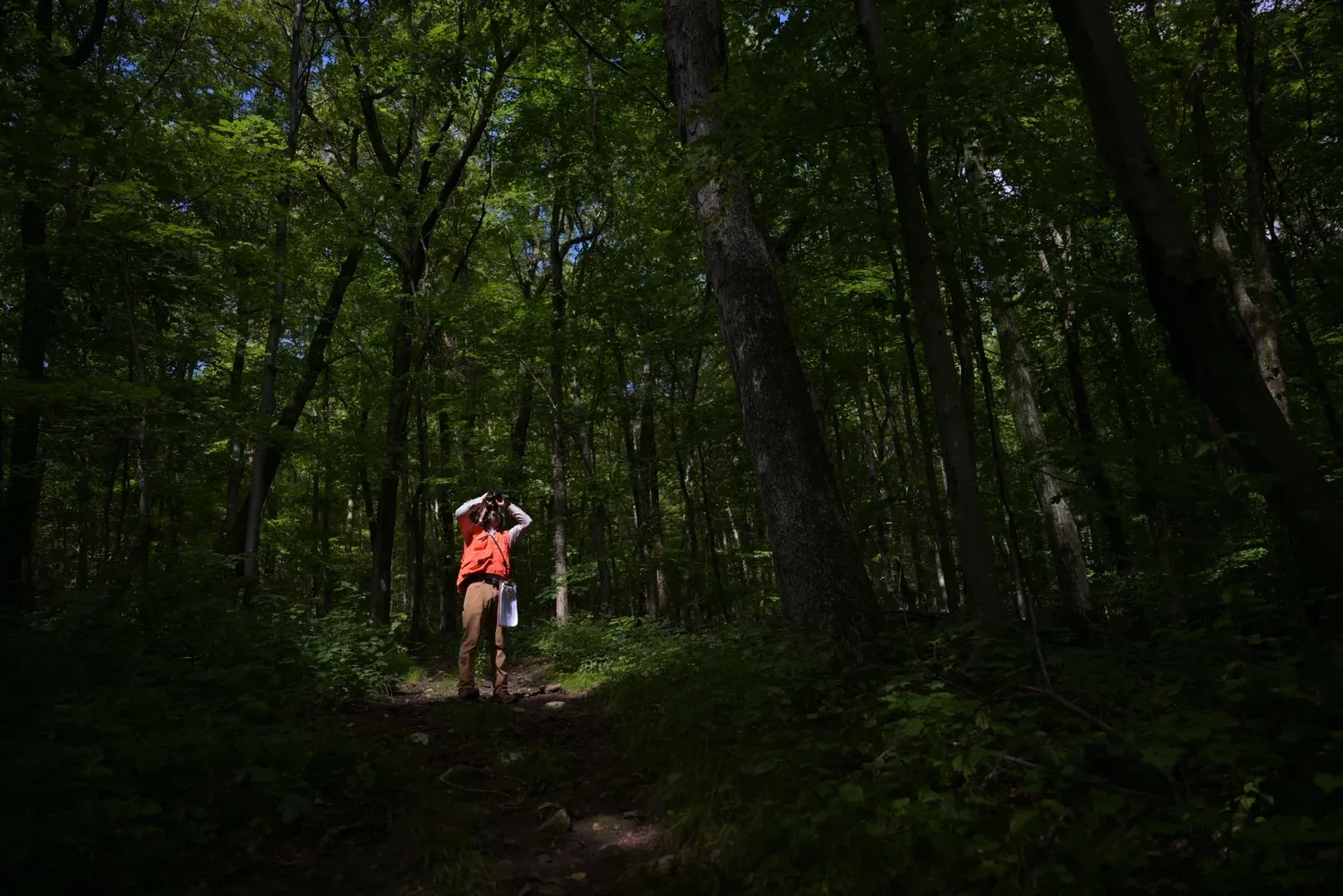
By Tess Terrible & Catherine Shen
Listen
It takes a lot of work to help preserve Connecticut's nearly 140 parks and forests. Today, we learn what that looks like across our state.
We hear from the Connecticut Forest and Park Association and learn about their efforts to pass down land stewardship to the next generation. Plus, Connecticut state parks are a treasure trove of Indigenous history. A local author shares their guide on hiking Indigenous lands across the state.
To explore more or plan a park trip, visit ctparks.com.
GUESTS:
Joey Listro: Executive Director of Connecticut Forest and Park Association
Jay Levy: Author of "Hiking Indigenous Lands of Connecticut and Massachusetts," tribal consultant for the New England Trail and an archaeologist for the Mohegan Tribe
Mason Trumble: Deputy Commissioner at Connecticut Department of Energy and Environment Protection (CT DEEP)
Where We Live is available on Apple Podcasts, Spotify, Amazon Music, TuneIn, Listen Notes, or wherever you get your podcasts. Subscribe and never miss an episode.
8th Annual Connecticut Trails Symposium Friday October 2nd
Sponsored by:
CTDEEP and Connecticut Greenways Council
This years theme:
" Benefits of Greenways"
https://cttrails.uconn.edu/symposium/
This year's symposium will be held at Southern Connecticut State University in New Haven and will be a day long series of speakers, instructional breakout presentations and networking by trail leaders along with state & municipal professionals as well as a multitude of volunteers from across the many organizations across the state.
It will be accompanied by a full weekend of partner events on Friday night, Saturday and Sunday that will highlight the regions diverse and deep support of greenways and the benefits it brings.
Please use the LINK above to send in your proposed presentations and offers of sponsorship
Mono Pond State Park in the news!
Mountain bike trail planned Mondo Pond’s dedicated track, first of its kind in state, will be ‘designed for riders of all skill levels’ By Stephen Underwood Hartford Courant
Mondo Pond State Park, which has expanded by hundreds of acres, is expected to get Connecticut’s first dedicated mountain biking trail, as part of a massive 400-acre expansion to boost recreational opportunities in the eastern part of the state. Located approximately 25 miles east of Hartford, Mondo Pond State Park sits within the towns of Columbia and Lebanon and was once a 218-acre reserve. The state park underwent a massive expansion in 2020, bringing the area to 650-acres total, according to officials. Trust for Public Land, state officials and community leaders from the towns of Columbia and Lebanon were able to secure and permanently protect more than 400 additional acres of forest at risk of development. The additional acreage more than tripled the size of the park. Trust for Public Land, a national nonprofit that works to help people enjoy the outdoors, along with the state’s Department of Energy & Environmental Protection and International Mountain Biking Association Trail Solutions, announced the release of a trails master plan for the state park this week. “The new Trails Master Plan outlines a vision for approximately 13 miles of thoughtfully designed new trails, along with selective decommissioning of unsustainable routes and the creation of three distinct recreation zones to enhance visitor experience while protecting natural resources,” said Rebecca Bullis, Trust for Public Land spokesperson. The expanded park trails are also planned to connect directly to the Air Line State Park Trail, a designated Connecticut Greenway, that spans more than 50 miles and supports various recreational uses. “Thank you to Trust for Public Land for bringing together DEEP, local communities, trail organizations, and other stakeholders to work together to balance conservation and recreation to develop a thoughtful vision for the future of Mono Pond State Park,” said DEEP Acting Commissioner Emma Cimino. “Through careful planning and meaningful community engagement, this plan lays the foundation for a sustainable trail system that will serve visitors for generations.” According to the trails master plan, the park will be unique in the state, with a trail network that will be organized into three distinct zones. The park will be split into a hiking-focused zone “with trails designed to highlight Mono Pond’s scenic views, natural features, and interpretive opportunities,” a shared-use zone which will feature a “central network accommodating hikers, runners, and mountain bikers,” and a mountain bike-focused zone which will be a “purpose-built single-track designed for riders of all skill levels, incorporating natural terrain features and opportunities for skill progression.” “We couldn’t be more grateful to our partners at IMBA, the Trust for Public Land, and CT DEEP for making the Mono Pond project a reality,” said Mick Ferraro, director of Communications & Outreach for the New England Mountain Bike Association. “This is the kind of collaboration NEMBA strives for, one where mountain biking and conservation go hand in hand, and where the whole community and all user groups win.” According to the Mountain Bike Association, this will be the first dedicated mountain bike trail in the state, with hopes that it will become a regional draw. The nearest IMBA created mountain bike trails are in Vermont, according to the group. “In Vermont, the Kingdom Trails network has transformed a remote region into a premier biking destination, attracting 94,000 annual visitors and generating $10.3 million in economic impact each year. In Chattanooga, Tennessee, mountain biking trails support an estimated $7.4 million in local economic activity, benefiting restaurants, hotels, and outdoor recreation businesses. Meanwhile, Oakridge, Oregon, a former logging town revitalized its economy by investing in mountain biking, leading to increased tourism and new job opportunities,” according to the Trust for Public Land. Arecent report the nonprofit conducted on the benefits of adding dedicated mountain bike trails to an outdoor recreation area said mountain bikers will travel to destination areas to seek out new trails. The report found that mountain biking tourists “spend an average of $416 per visit, contributing to local businesses, lodging, and dining establishments.” Visitor spending also supports local employment, with the trail networks in the study generating up to 1,626 jobs and $54.1 million in labor income annually. “The outcome at Mono Pond stands as a great example of what can be achieved through planning and collaboration between state and local agencies alongside advocacy organizations,” said Ama Koenigshof, IMBA Trail Solutions Director of Planning & Design. “It triples the acreage and creates a regional outdoor destination accessible by thousands of local residents. This project also exemplifies the balance needed in many places, particularly where population density is high, of striking an equilibrium between preserving natural resources and creating recreation access. We’re proud of the outcome and especially the connectivity with nearby, existing parks and trails,” she said. P lanning on the project began in September 2024, when the IMBA Trail Solutions team conducted an initial site visit to assess conditions, according to a spokesperson with Land for Public Trust. In 2025, the team returned to begin detailed trail design. “We’re still waiting on some grant funding before beginning trail work. We’re waiting on a Recreation Trails grant submission which, along with a TPL match, would cover building up to the first four miles of trail” Bullis said. Trust for Public Land hopes to begin trail construction work later this year
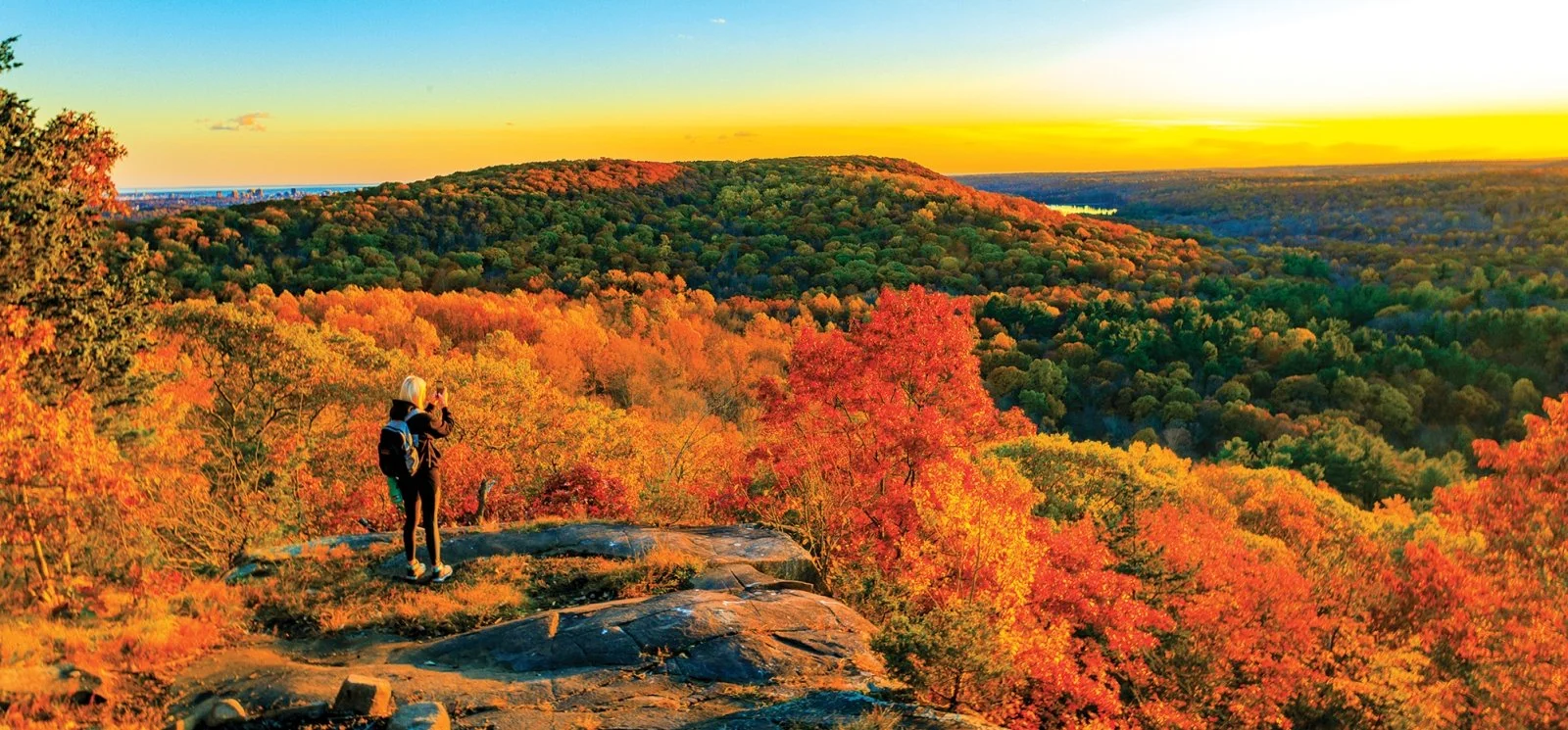
Governor Lamont And DEEP Kick Off Summer Activity Season and America’s 250th Anniversary
Historic Parks, Outdoor Recreation, and Continued Investments Connect Visitors With Connecticut’s Role in the Nation’s Founding
(HARTFORD, CT) – As Memorial Day Weekend marks the unofficial start of summer and the United States prepares to celebrate the nation’s 250th anniversary, Governor Ned Lamont and the Connecticut Department of Energy and Environmental Protection (DEEP) are inviting residents and visitors to explore Connecticut’s state parks, beaches, forests, trails, waterways, and historic sites that connect outdoor recreation with the state’s role in the American story.
From shoreline destinations and scenic campgrounds to historic forts and cultural landmarks, Connecticut’s state parks offer opportunities for recreation, reflection, and remembrance during one of the busiest travel weekends of the year. Connecticut’s network of 110 state parks, 32 state forests, and 117 state boat launches welcomes more than 15 million visitors annually and remains central to the state’s outdoor recreation economy and quality of life.
“Connecticut’s state parks and historic sites give residents and visitors the opportunity to experience the natural beauty, history, and shared heritage which defines our state,” Governor Lamont said. “As we commemorate America’s 250th anniversary and honor Memorial Day, we encourage everyone to explore these public lands—and reflect on our nation’s history and enjoy the many recreational opportunities Connecticut has to offer.”
“Many of Connecticut’s state parks played a key role in shaping our country, and we hope you’ll add a few of them to your itinerary this summer,” DEEP Commissioner Katie Dykes said. “Thanks to the Passport to the Parks program, the parks are free to enter with a Connecticut license plate, making it easier for residents to choose to spend a day in a park or pop in for a quick spontaneous visit. And, thanks to a historic investment by the Lamont administration and the state legislature to restore our parks infrastructure, the parks are in great shape and ready to receive visitors this summer and for years to come. We hope everyone has a fun and safe summer.”
Celebrating America’s 250th through Connecticut’s state parks
This summer season coincides with the nation’s semiquincentennial celebration, offering a meaningful opportunity for visitors to experience places that reflect Connecticut’s contributions to American history.
Several Connecticut State Parks preserve landscapes and historic sites connected to the nation’s past, including Fort Trumbull State Park in New London. Located along the Thames River, Fort Trumbull has served as a strategic defensive site since the Revolutionary War and played a role in multiple periods of American military history. Today, visitors can explore restored fortifications, museum exhibits, and scenic grounds overlooking the waterfront.
Other state parks and historic destinations, including Gillette Castle State Park, Fort Griswold Battlefield State Park, and Putnam Memorial State Park, offer visitors opportunities to connect recreation, education, and history throughout the summer season.
As part of Connecticut’s participation in America’s 250th commemoration, DEEP encourages residents and visitors to incorporate historic parks and cultural destinations into their summer travel plans while enjoying the state’s outdoor recreation opportunities. The annual Sky’s the Limit Hiking Challenge is a great way for park visitors to have a self-guided experience across many historically and culturally rich state parks and forests this year. Find out more about the challenge at .
Continued investments in Connecticut State Parks
Recognizing the importance of state parks and forests to residents, tourism, and local communities, the Lamont administration has made a historic commitment of nearly $140 million through the Restore Connecticut State Parks initiative to address long-standing infrastructure needs across the state park system. To see an ongoing list of the many projects that have been completed and are underway across the state, visit the initiative’s website at portal.ct.gov/deep/state-parks/restore-ct-state-parks.
Park visitors will continue to see improvements throughout the system this summer, including the newly built Welcome Center at Sleeping Giant State Park, enhanced lighting at the Bolton Notch State Park/Hop River State Park Trail tunnel, and a new covered bridge at Chatfield Hollow State Park. At Austin F. Hawes Memorial Campground, work is moving forward on two new bathhouse facilities to improve the camping experience for visitors. Fort Trumbull has also benefited from the Restore Connecticut State Parks initiative, including the recent replacement of the historic blockhouse’s 1800s-era roof and repairs to the parking lot, with additional projects scheduled in the near future.
Expanding access to the outdoors
DEEP continues to improve accessibility and visitor experiences across Connecticut’s state parks through programs and partnerships designed to make outdoor recreation more available to all residents and visitors.
The Passport to the Parks program continues to provide Connecticut residents with free parking access at state parks, forests, beaches, trails, and historic sites when visiting in a Connecticut-registered vehicle. The program has created one of the most easily accessible park systems in the Northeast and has helped reduce traffic delays at popular destinations while supporting park operations, seasonal staffing, and ongoing maintenance throughout the state park system.
Visitors with mobility challenges are now able to reserve all-terrain wheelchairs free of charge at seven Connecticut State Park and Forest locations: Gillette Castle, Dinosaur, Rocky Neck, Harkness Memorial, Stratton Brook, Topsmead, and Wadsworth Falls State Parks. Reservation information is available online at .
Through DEEP’s Office of Outdoor Industry and Experiences, the state is also expanding partnerships that enhance visitor amenities and recreation opportunities statewide. New paddlecraft rental services will soon launch at additional state park locations following a competitive request for proposals process. Additional concession opportunities are also being developed at Gillette Castle State Park and Lake Waramaug State Park.
Visitors can also use to discover destinations across Connecticut by activity, including hiking, biking, swimming, camping, fishing, boating, and picnicking. The site also highlights nearby restaurants, lodging, and attractions to help visitors make the most of their trips.
Camping, beaches, and lifeguards
Connecticut State Parks continue to be a popular destination for camping and outdoor recreation throughout the summer season. All state park and forest campgrounds are fully booked for Memorial Day Weekend, although reservations remain available for later in the summer.
Camping reservations can be made online at or by calling 1-877-668-CAMP (2267).
Lifeguard coverage will begin Memorial Day weekend at Hammonasset Beach State Park, Rocky Neck State Park, Silver Sands State Park, Indian Well State Park, and Black Rock State Park. Additional swimming locations are expected to be guarded as staffing levels increase throughout June.
DEEP’s Water Quality Monitoring Program will continue testing designated swim areas throughout the summer season, with water quality updates available online at .
Plan ahead before visiting
DEEP encourages visitors to check park conditions and capacity updates before traveling to state parks and boat launches, particularly during weekends and holidays. Visitors are reminded that many locations such as Scantic River State Park, Bigelow Hollow State Park and Gardner Lake State Park reach capacity early in the day.
Capacity closures and operational updates are routinely posted on social media through and . As parks reach capacity, visitors are urged to consider visiting other less popular locations with similar amenities by checking the parks website at .
Visitors arriving to state parks in out-of-state registered vehicles should be prepared to pay a parking fee or consider purchasing a season pass.
Parking can be reserved at Squantz Pond State Park on holidays and weekends. During the peak summer season, parking at Squantz Pond is limited to 250 vehicles. Once capacity is reached, the park is closed and will remain closed for the rest of the day. Walk-ins are prohibited when the park is closed for capacity. There is no alternative parking, and cars parking or unloading on local roads and parking lots will be ticketed and/or towed. Visitors may reserve a parking pass for weekends and holidays during the peak season up to 14 days in advance. To reserve a parking pass, please visit and search the keywords “Squantz Pond.”
Water and boating safety
DEEP manages 117 state boat launches across Connecticut on ponds, lakes, rivers, and Long Island Sound, and all are free to use. Information and directions to these facilities can be found online at portal.ct.gov/deep/boating/boating-and-paddling.
While all state boat launches are accessible throughout the year, DEEP reminds boaters that late spring water temperatures remain colder than the air and can pose substantial dangers to unprepared boaters. To prevent serious consequences from an unexpected cold-water immersion, boaters should exercise caution by using proper equipment, practicing safe techniques, and avoiding dangerous situations.
Some helpful tips for those planning to go boating:
Always wear your life jacket: DEEP recommends all boaters wear a personal floatation device (PFD) year-round. However, Connecticut law requires anyone in a kayak, canoe, rowboat, or stand-up paddleboard to wear a properly fitting PFD from October 1 through May 31. If a boater ends up in the water, a life jacket will keep them afloat and make them more visible, significantly improving their chances of survival.
Never paddle alone: If a boater ends up in the water, a partner can help you get back into the boat or reach shore safely.
Paddlers should dress for the water temperature, not the air temperature. Water temperatures can vary greatly around the state during the spring, but all are still below 68 degrees Fahrenheit. Cold water immersion increases the risk of cold-water shock and involuntary gasp reflex, which is a leading cause of drowning.
File a float plan: Draft a float plan that includes your boating location, expected time of departure and return, and who to call in case of emergency. Give the float plan to someone at home and be sure to call them once you are back ashore safely.
Maintain a proper lookout: Higher water levels in the spring can dislodge items like docks, pilings, and trees and leave them floating in rivers and into Long Island Sound. Boaters should be especially vigilant early in the season to look for and avoid this floating debris.
Seasonal employment opportunities
Seasonal employment opportunities remain available at Connecticut State Parks this summer, including positions for lifeguards, park rangers, maintenance staff, and other seasonal operations roles, particularly in northwestern Connecticut. Information on available positions can be found at workoutside.ct.gov.
Help protect Connecticut State Parks
DEEP encourages all visitors to help preserve Connecticut’s public lands by properly disposing of trash, respecting natural resources, and leaving parks cleaner than they found them.
“Connecticut’s state parks belong to all of us,” Connecticut State Parks Director Brian Wilson said. “By taking care of these shared spaces today, we help ensure future generations can continue to enjoy and learn from them for years to come.”
About Connecticut State Parks
Since its establishment in 1913, the Connecticut State Park system has provided residents and visitors with access to natural, cultural, and historic resources through a statewide network of parks, forests, beaches, trails, and environmental education centers designed to inspire recreation, stewardship, and discovery.
The official Connecticut State Parks website, , offers an easy way to discover new destinations for your next adventure. Select “Explore our Parks” to search parks by activity. One helpful feature is the “While You’re Here” section, which provides a list of local food, lodging, and other attractions nearby to make the most of your visit.
Show your support
Love your Connecticut State Parks? Pick up a t-shirt or poster of your favorite park featuring an original DEEP design at . Any proceeds generated support the Passport to the Parks program.
Breaking News! Connecticut Joins National Coalition to Promote the State’s Outdoor Recreation Economy
DEEP Office of Outdoor Industry and Experiences is the 22nd State Office to Join the Confluence of States National Network
(HARTFORD) - Today the State of Connecticut joined the Confluence of States, a bipartisan, national coalition of state governments dedicated to growing the outdoor recreation economy and increasing access to the outdoors. The Connecticut Department of Energy & Environmental Protection (DEEP) Office of Outdoor Industry and Experiences joins 21 other state offices in the Confluence of States dedicated to advancing five pillars of outdoor recreation: conservation and stewardship, education and workforce training, economic development, public health and wellness, and opportunity and experience.
As a member of the Confluence of States, the Connecticut Office of Outdoor Industry and Experiences will collaborate with other state outdoor recreation directors to identify opportunities to increase equitable access to the outdoors, support Connecticut-based outdoor recreation and conservation organizations and businesses, amplify new tourism opportunities, pursue new outdoor recreation workforce pipeline possibilities, and elevate outdoor recreation experiences in State Parks through the Partnership in Parks initiative.
In 2024, DEEP launched its Office of Outdoor Industry & Experiences by asking businesses, organizations and the general public to submit ideas to its Partnership in Parks Request for Information, which remains open for submission on a rolling basis. The submissions resulted in piloting new outdoor recreation services last recreation season and recently issuing a Paddlecraft Rental Service Request for Proposals at seven State Parks. Currently DEEP is seeking a qualified concessionaire to operate food, beverage, and campground store services at Lake Waramaug State Park in Kent and New Preston and those interested in submitting proposals can find more information here. Additional draft RFPs for new or expanded outdoor recreation experiences, services, and amenities are expected to be announced in the coming months, with public comment encouraged.
The Confluence of States network will support much of the work DEEP is already doing, including workforce training. Over the past three years DEEP has partnered with workforce investment boards in both eastern and western Connecticut to recruit mobile work crews that can be deployed across the state to address critical needs on DEEP-managed lands, which have faced increased pressure as visitation levels have risen following the pandemic. By pairing hands-on workforce training with real conservation and park maintenance needs, the mobile work crew model helps DEEP stretch limited resources, improve the visitor experience, and build a stronger pipeline of workers prepared for careers in outdoor recreation, conservation, and land stewardship.
Just last week, the Office of Outdoor Industry & Experiences hosted an inaugural Connecticut Outdoor Recreation Day at the State Capitol, with more than 40 outdoor industries, retailers, guides, and recreation groups exhibiting and hundreds of people, including more than two dozen state legislators, notably Rep. John-Michael Parker, House Chair, Environment Committee and Rep. Patrick Callahan, Ranking Member, Environment Committee, attending the event. Exhibitor space for the event quickly filled to capacity with many business and conservation organizations from around the state who showed up to demonstrate their support the outdoor recreation economy.
“Our parks, forests, fish, wildlife, and waterways are a big reason why Connecticut is such a great place to live, work, and play. These natural resources hold intrinsic conservation value and support many local businesses across the state,” said DEEP Commissioner Katie Dykes. “Connecticut’s outdoor recreation economy is not only thriving, it’s outperforming the national average for the second year in a row, and we are excited to build on this momentum through collaboration with likeminded states.”
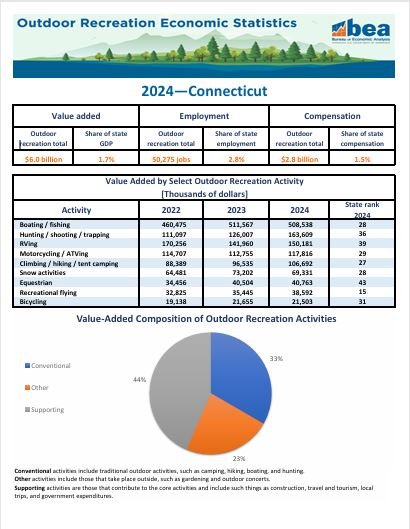
This past March, the U.S. Bureau of Economic Analysis (BEA) released data on the outdoor recreation economy that showed Connecticut’s outdoor recreation economy continues to grow, actually outpacing the national average for the second consecutive year. Further, the data shows the industry in Connecticut is larger than most realize – valued at $6 billion - larger than in Maine, New Hampshire, or Vermont. It employs more than 50,000 people in Connecticut, contributing $2.8 billion in salary and wages to the state economy.
“We are excited to build on Connecticut’s outdoor recreation economy through the Partnership in Parks initiative,” said Jeff Shaw, Director of the Connecticut Office of Outdoor Industry and Experiences. “By fostering innovative partnerships, we aim to elevate visitor experiences across our State Parks, such as through the recently released RFP for concession services at Lake Waramaug State Park, one of Connecticut’s most scenic and cherished destinations. Joining the Confluence of States will further position Connecticut as a leader in providing equitable, accessible, and environmentally responsible outdoor experiences for all.”
"We are thrilled to welcome Connecticut as the 20th member of the Confluence of States. Their commitment to enhancing outdoor recreation opportunities and experiences through partnerships, conserving our natural landscapes, and fostering economic growth aligns perfectly with our five pillars," said Nathan Reigner, 2026 Chair of the Confluence of States and Director of the Pennsylvania Office of Outdoor Recreation. "As a state renowned for its accessibility to the outdoors, diverse landscapes, and extensive State Park system, Connecticut brings a wealth of knowledge to our bipartisan coalition.”
“Connecticut's formal commitment to the Confluence of States is testament to the groundswell of support for outdoor recreation as a driver of resilient state economies, connector of communities, and boon to public health,” said Chris Perkins, Vice President of Programs at the Outdoor Recreation Roundtable. “The $1.3 trillion outdoor recreation economy is better off with robust state leadership for outdoor recreation initiatives and investments, and we are proud to have showcased these directors and the Confluence of States at our National Executive Forum on Health and Outdoor Recreation.”

On Thursday, May 7, 2026, Connecticut became the 22nd state to join the Confluence of States, a bipartisan, national coalition of state governments dedicated to growing the outdoor recreation economy and increasing access to the outdoors. Jeff Shaw, Director of the Connecticut Office of Outdoor Industry and Experiences, is pictured holding the signing document at the signing event in Washington, D.C. Credit: CT DEEP
CT Run CO Gets Huge Award!
Our founder, Megan Searfoss, has been named the U.S. Small Business Administration – Connecticut Woman-Owned Small Business of the Year for 2026. This honor is a powerful recognition of the passion, purpose, and community that drive everything we do.
From the very beginning, Megan set out to build more than a running store, she created a space where everyone feels welcome, supported, and inspired to move. This award reflects that vision and the impact it continues to have across Connecticut.
As Moraima Gutierrez, of the US SBA shared:
“This award encompasses your spirit of entrepreneurship and diligent efforts to create jobs, expand the gift of running to everyone, as well as building welcoming spaces that promote wellness and connection for all.”
We are grateful to the SBA Connecticut District Office for this recognition, and even more grateful to our incredible community who make CT RUN CO what it is every day.
Please join us in congratulating Megan on this well-deserved achievement. We are just getting started!

National Governors Association Policy Brief-Outdoor Recreation is Good Public Health Policy
States are increasingly exploring the intersection of health policy and outdoor recreation to better understand how these policy areas could be leveraged for the positive benefit of their constituents. While formal partnerships are still relatively novel, Governors have a variety of opportunities to engage with outdoor recreation and health agencies to create long-term benefits. This policy brief will examine these opportunities and highlight examples of innovative policy development from state and territory Governors.
(Download)
On August 20, 2025, the National Governors Association’s Center for Best Practices hosted a one-day in-person event where Governors’ health advisors, directors of state and territory offices of outdoor recreation, academics, and non-profit stakeholders discussed opportunities for state and territory innovation at the nexus of health and outdoor recreation policy. This roundtable was generously supported by the Health Resources and Services Administration (HRSA).
Public Health has long been a pillar of Governor Policy Teams and state-level policy. Health policy experts advise Governors on emerging health concerns, track infectious diseases, and help craft policies to prevent and address chronic diseases.
Compared with the long-established health policy arena, outdoor recreation is an emerging area of policy. The first Office of Outdoor Recreation was founded by former Utah Governor Gary Herbert in 2013. Since then, an additional 23 states have created a state level office of outdoor recreation. While the federal government plays an important role in outdoor recreation, much of the innovation and policy development has stemmed from state-level action and investment. Outdoor recreation is bipartisan, geographically diverse and contributes significantly to state economies. The U.S. Bureau of Economic Analysis’ most recent report finds that outdoor recreation contributed $1.2 trillion of economic output to the U.S. economy annually.
Both health and outdoor recreation are flexible policy areas that can include aspects of the built and natural environment, food and nutrition, transportation access, local planning, workforce development, data sharing and analysis, and incentives for small businesses to address public challenges such as food deserts. While relatively unexplored on the national scale, the intersection of health and outdoor recreation represents a fruitful area for Governors to pioneer and expand state policy solutions and materially increase the quality of the lives of their constituents.
Opportunities for Governors to Consider
1. Provide Widespread Opportunities to Get Outdoors
Outdoor recreation can improve population health outcomes within states by promoting physical activity, which in many cases reduces chronic disease, and by providing educational opportunities. However, these impacts will inevitably be limited without widespread opportunities to recreate and expand recreation assets.
Challenges to accessing outdoor recreation opportunities come in a variety of forms but may include skill-level, cost-prohibitive equipment or training, physical or mental disabilities, transportation, or even age. Likewise, barriers to developing outdoor recreation infrastructure are varied but can include land use practices, proper ownership, permitting regulations, funding for construction and maintenance, and local capacity constraints. Intentionally addressing some hurdles in the planning and development processes can increase public access to recreation and expand recreation assets, thereby allowing for broader impact on public health.
Examples could include:
Specialized infrastructure investments to accommodate individuals with physical disabilities.
These could include adaptive kayak launches, wheelchair friendly pathways and trails, and adult-sized changing tables for individuals with developmental disorders and/or physical disabilities.
Sensory gardens and/or specialized programming for neurodiverse populations.
Create or expand partnerships to reduce cost barriers to outdoor recreation.
Coalitions of existing or novel groups, such as outdoor non-profits, state/territory agencies, Scouts, faith-based organizations, and existing recreational leagues could work to coordinate and pool resources to ease the burden or transportation, essential gear, and/or specialized training or guides.
Work to address transportation hurdles proactively.
Situating outdoor recreation opportunities and infrastructure within existing active transportation corridors and/or within existing public transit system footprints can reduce transportation barriers and provide benefits to both the outdoor recreation and transportation sectors.
Emphasizing accessibility as an essential component, especially for aging populations and those with disabilities.
Some great examples include Vermont’s Park Access Fund and Tennessee’s Access 2030 initiative.
2. Create or Formalize Partnerships Between State Health and Outdoor Recreation Agencies:
Many informal or organic partnerships have begun to develop between state/territory health departments and outdoor recreation offices and other state agencies involved in developing and providing outdoor recreation. While these informal partnerships can be impactful, they may lack formal recognition, sufficient resources, and stakeholder buy-in. Governors can instruct their senior leaders to create or expand interagency collaborations and agreements that create formal relationships, establish shared priorities and goals, provide personnel and program resources, and offer a unified entity for stakeholders to engage.
Examples of State Partnerships
The Commonwealth of Pennsylvania Department of Health and Department of Natural Resources have developed a formal Memorandum of Understanding (MOU) to enact their joint work related to active transportation to increase safe and accessible opportunities for physical activity to improve public health.
This MOU was signed by leadership from both state agencies and is designed to last for five years. After the five-year period, the MOU automatically comes up to be reevaluated and reworked as needed. This process allows for continued proactive buy-in from both agencies over time, even in the event of state or departmental staff and leadership changes.
3. Foster Data Sharing and Interoperability Between State Systems
To better understand the interplay between health outcomes, state initiatives, and outdoor recreation development and programming, states can pioneer or expand interagency data sharing agreements and processes. Although state agencies collect significant data on public health, outdoor recreation, economic indicators, and community data, many of these datasets are siloed and/or not compatible across distinct agency systems. Governors can direct their cabinet officials to explore opportunities for multiple departments to have standardized systems and access. As relevant new data is collected and added to state systems, state staff can categorize data across shared systems to better understand health and outdoor recreation program impacts.
Participants emphasized the need to break down silos between public health, transportation, education and recreation agencies:
Examples Could Include:
Merging or creating new data sets from cross-agency data collection; this can be accomplished through formal agreements, joint system procurement, or mutual system access and management that can work to de-silo data systems and reinforce agency collaboration.
State/territorial health and outdoor recreation agency data are just as important to understanding trends and their broader impacts as data sets from departments of transportation, departments of education, state/territory economic development authorities, institutions of higher education, and Governors’ constituent services offices.
Combining existing data systems across state/territory agencies may highlight information gaps, allowing agencies to reapproach their data collection, analysis and sharing processes to improve overall efficiency and data integrity.
Expanded data sharing and collection may be possible through existing reporting structures. Minnesota recently published their Statewide Comprehensive Outdoor Recreation Plan (SCORP). This plan included data collection around user-sentiment but also included a novel calculation on the economic impact of outdoor recreation in every county of the state.
Arkansas’ Office of Outdoor Recreation partnered with Heartland Forward to create a state-level calculation on the impact of outdoor recreation spending for different regions of the state.
Governors can call for expanded federal health and outdoor recreation data collection and sharing around the intersection of health and outdoor recreation.
The Bureau of Economic Analysis (BEA) issues an annual report detailing the total economic impact of outdoor recreation by state and sector. While this information is crucial to state decision makers, it is limited to state level reporting and does not perform sub-state or regional calculations that could provide invaluable insight to states.
Currently, there is no cross-sector health and outdoor reaction model to calculate outcomes. One promising model, the Oregon Outdoor Recreation Health Impacts Estimator Tool, demonstrates the value of tracking health data from outdoor recreation activities. Expanded and refined models derived from a shared methodology could maximize data collection and standardization.
4. Improve Youth Engagement and Stewardship
Children today have more access to digital options for education, social connection and entertainment than any previous generation. While not inherently bad, these options can have significant negative impacts on childhood development, reinforcing the need to offer a counterbalance and create opportunities to disconnect and be outdoors. Areas where children and youth already congregate, such as schools and community centers, can be connected via outdoor recreation infrastructure and active transportation corridors. Governors can tailor state and territory health and outdoor recreation programming to encourage children to get outside and can also work to instill a sense or stewardship that will ideally grow into a life-long love of health habits and the outdoors.
Some Points to Consider:
Opportunities for young people to get outside can be developed through volunteerism and civic engagement lenses as pathways to revitalize community health and resilience.
Addressing screen time and promoting outdoor alternatives through schools and community hubs.
State and territory advisors can propose evidence-based standards, such as the High-Impact Obesity Prevention Standards to limit screen time, and promoting outdoor alternatives through early childhood education, K-12 schools, and community hubs and before and after-school programming when developing related policy and regulations.
Investing in outdoor recreation-specific built environment.
5. Work with Local Communities to Design and Own Programming and Resources
Before outdoor recreation resources and programs can produce lasting positive health impacts, they must be planned and developed. States and territories should proactively partner with communities and community-based organizations to develop resources reflective of target populations in the area to alleviate any potential negative impacts on communities. Communities are often eager to develop new outdoor recreation opportunities but may have reservations about possible displacement from large-scale development, increased tourism and traffic, and/or financial burdens related to the ownership and maintenance of assets. States can take a variety of actions that will help maximize the positive impacts while reducing negative outcomes.
Some Considerations:
States can develop programs and resources that integrate outdoor recreation into daily activities like commuting, attending school and connecting neighborhoods with each other.
The Washington and Old Dominion Trail is a 100-foot-wide park that extends 45 miles across northern Virginia. This corridor park began its life as a railroad in the mid-19th century. By the late 1960s, the railroad stopped operations, and Dominion Power, the major electric utility in the area, purchased the right-of-way to host energy infrastructure. Trail advocates quickly saw the potential and worked with the utility to coordinate a paved linear pathway, connecting communities across northern Virginia.
The Lamoille Valley Rail Trail is a 94-mile ADA compliant trail in Northern Vermont that connects 18 communities. The trail can be used all four seasons for multi-purpose recreation and transportation, including walking, hiking, cycling, horseback riding, snowshoeing, cross-country skiing, dogsledding and snowmobiling.
States and territories can partner with community-based organizations and constituents to co-develop programming and opportunities that are valued by the community. Developing misaligned resources may turn community members away and foster disinterest or distrust toward state actions.
Local programs and outcomes may look different than originally designed. When possible, state agencies should let local communities take the lead in developing resources and programming that are distinct to their community and uniquely interesting to locals.
States can empower local and regional administrative structures like trail and recreation authorities, as well as expanding resources to support management and maintenance of recreation resources, to help mitigate local capacity challenges imposed by outdoor recreation infrastructure.
Conclusions
As this expert’s roundtable clearly demonstrates, there is growing appreciation of and enthusiasm for policy development at the nexus of health and outdoor recreation. Governors have a variety of opportunities to explore and formalize multi-disciplinary policy relationships within their own states. While many of these programs and opportunities are currently in their pilot or initial phases, initial results are highly encouraging. States, as laboratories of policy innovation, can experiment and shape this emerging discourse into durable programs that increase the health and well-being of their neighbors.
Press Release from the CT Office of Outdoor Industry and Experiences!
Big news for our outdoor recreation economy friends! The CT Office of Outdoor Industry and Experiences is hosting the Connecticut Outdoor Industry Day at the Connecticut State Capitol. This is an unprecedented opportunity for the outdoor recreation businesses of CT to show off to our legislators our offerings and importance to the quality of life and economy here in CT.
03/24/2026
DEEP to Host CT Outdoor Recreation Day at State Capitol April 30th
Event Will Showcase CT-based Outdoor Industries, Retailers, Guides and Recreation Groups
(HARTFORD, CT) — The Office of Outdoor Industry and Experiences will host an inaugural Connecticut Outdoor Recreation Day featuring Connecticut-based outdoor industries, retailers, guides, and recreation groups on Thursday, April 30, 2026, from 2:00-5:00 p.m. in the North Lobby of the State Capitol in Hartford.
The event seeks to raise awareness of the growing outdoor recreation industry in Connecticut as well as opportunities to recreate in the outdoors, anchored by our State Parks and Forests. Registration is now open. Visit the Connecticut Office of Outdoor Industry and Experiences event webpage for details.
The federal Bureau of Economic Analysis (BEA) recently released data on the outdoor recreation economy, showing Connecticut’s outdoor recreation economy continues to grow, outpacing the national average for the second consecutive year.
“Connecticut’s outdoor recreation economy is not only thriving; it is outperforming the nation for the second year in a row, a testament to the accessibility of our State Parks through the Passport to the Parks program and our investments in park infrastructure through the Restore CT State Parks initiative,” said DEEP Commissioner Katie Dykes. “As we continue to build on this momentum, we invite outdoor businesses, partners, and stakeholders from across the state to join us at the Capitol for the first-ever Outdoor Recreation Day.”
The outdoor recreation industries, organizations, and people that support it are powerful drivers of community well-being and economic vitality. According to the BEA’s Outdoor Recreation Satellite Account data, the industry in Connecticut is bigger than many people realize – valued at $6 billion - larger than in Maine, New Hampshire, or Vermont. It employs more than 50,000 people in Connecticut, contributing $2.8 billion in salary and wages to the state economy.
Governor Lamont has championed a once-in-a-generation investment in Connecticut’s outdoor recreation infrastructure through the Restore CT State Parks initiative. This transformative capital improvement program is enabling DEEP to address an unprecedented backlog of repairs and upgrades, needs that were further exacerbated by a surge in park usage following the pandemic. Connecticut State Parks are the most accessible in the Northeast through the Passport to the Parks program which allows anyone in a Connecticut-registered vehicle to park free of charge at all State Parks and Forests year-round. Additionally, the CT Recreational Trail Grant program provides funding to local and regional organizations in support of trail projects that connect communities, improve health, reduce transportation costs and enhance property values.
Connecticut is well-renowned for its outdoor recreation. Its natural landscape includes 5,800 miles of rivers and streams, 2,000 miles of scenic, public access trails, 35,000 acres of wildlife management areas, 142 state parks and forests comprising 255,000 acres, and 224 miles of accessible rail trails. There are also 117 state boat launches, 14 state campgrounds, and every Connecticut resident lives within a 15-minute driving distance to recreational activities in a state park. Visit CTParks.com for more information about State Parks.
“We encourage outdoor businesses and organizations statewide to attend the inaugural Connecticut Outdoor Recreation Day at the Capitol and help shape the future of this growing industry,” said Jeff Shaw, Director of the CT Office of Outdoor Industry and Experiences. “Connecticut’s outdoor recreation economy continues to outpace national economic growth and helps create healthier communities across the state.”
In 2024, DEEP launched its Office of Outdoor Industry & Experiences by asking businesses, organizations and the general public to submit ideas to its Partnership in Parks Request for Information (RFI), which remains open to submissions on a rolling basis. Submission to the RFI resulted in piloting new outdoor recreation services last recreation season and recently, the release of a Paddlecraft Rental Service Request for Proposals (RFP) to include paddlecraft rental services at seven State Parks. Additional Draft RFPs for new or expanded outdoor recreation experiences, services, and amenities are expected to be announced in the coming months, with public comment encouraged.
For more information, contact Jeff Shaw atJeffrey.Shaw@ct.gov.
Twitter: @CTDEEPNews
Facebook: DEEP on Facebook
Contact
DEEP Communications
DEEP.communications@ct.gov
860-424-3110
Hot off the press! Connecticut's Outdoor Recreation Economy tops $6B
We are #2 in Northeast for total economic value derived from outdoor recreation activity.